How Often Should a Small Business Website Be Redesigned?
Website Fixes

There's no fixed number that applies to every business, but there is real data behind the question, and the honest answer is closer to "watch for triggers" than "circle a date on the calendar." Here's what the numbers actually say, and how to use them.
Key Takeaways
The average website's useful lifespan has shrunk to 2 years, 4 months before it needs a substantial update (Huemor, 2025).
That average hides real variation: food and beverage sites average 1 year, 2 months; construction sites average 5 years, 5 months (Huemor, 2025).
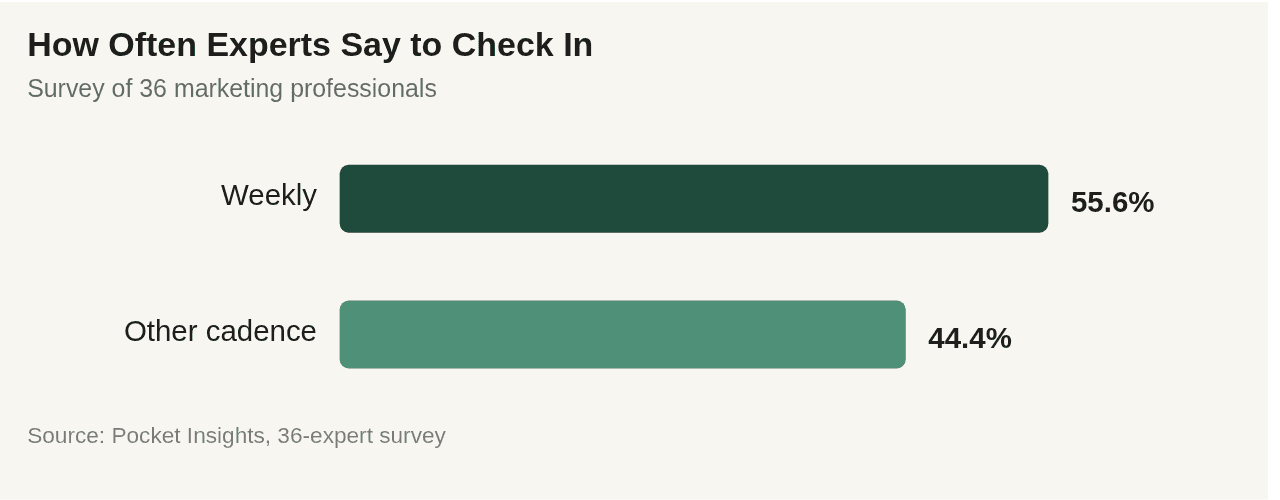
In a survey of 36 marketing professionals, 55.6% recommended checking website analytics weekly, even without a redesign planned (Pocket Insights).
Age is a useful signal, not a deadline. A well-built 4-year-old site can outperform a poorly-built 1-year-old one.
What's the Average Lifespan of a Small Business Website?
Just over two years. Research on website redesign cycles puts the overall average at 2 years, 4 months before a site needs a substantial update (Huemor, 2025). That's shorter than most business owners expect. A site that "still looks fine" to you may already be past the point most visitors stop reading it as current.
Does the Right Timeline Vary by Industry?
Significantly. Food and beverage sites average just 1 year, 2 months before falling behind, driven by fast-moving trends, seasonal menus, and visual expectations that shift quickly. Construction sites average 5 years, 5 months. It's a slower-moving industry where visual trends and customer expectations change less dramatically year to year (Huemor, 2025).
For Bradenton specifically, this matters more than the national average suggests. A lot of local businesses such as restaurants, boutiques, charter and rental operators sit closer to the fast-moving end of that range than the slow-moving one. Especially anything tied to tourist or snowbird season, where visitor expectations reset every year.
Does your website need a rebuild? The complete guide
Should I Redesign on a Schedule, or Wait for Problems?
Wait for problems, but check for them on a schedule. The lifespan averages above are useful as a general planning horizon, not a hard deadline. A site built well from the start can outlast the average, and a site built poorly can fall behind it in half the time. The better approach is a regular check-in that tells you whether problems actually exist yet, rather than redesigning reflexively at a fixed interval.
Free website audit checklist for Bradenton small businesses
How Often Should I At Least Check In, Even Without a Redesign?
In a survey of 36 marketing professionals, 55.6% recommended checking website analytics on a weekly basis, even for businesses not actively planning a redesign (Pocket Insights). That's a small, informal survey rather than a massive study, but the direction is consistent with what we see with clients: consistency matters more than intensity.
A quick monthly or even quarterly look is realistic for most small business owners who aren't tracking analytics as a full-time job. The point isn't hitting a specific frequency, it's not going a year or more without ever looking.
What Are the Real Signs It's Time, Regardless of Age?
Age is a clue, not a verdict. A handful of concrete signs matter more than the calendar:
Your site fails most categories in a full self-audit, not just one or two.
You've noticed a real drop in calls or form submissions with no other explanation.
Your site still isn't usable one-handed on a phone.
You're embarrassed to hand someone your business card with the URL on it.
Testing your Bradenton business site on a phone
Does a Newer Site Ever Need a Redesign Sooner Than Expected?
Yes, more often than people assume. A site built quickly on a restrictive platform, or built without much input on what the business actually needed, can hit its ceiling well inside a year. Age isn't a substitute for whether the foundation was solid to begin with. A carefully built 4-year-old site can easily outperform a rushed one-year-old site on every practical measure.
What Happens If You Just Don't Redesign?
Nothing dramatic, at first. That's exactly what makes neglect easy. An aging site doesn't break, it just slowly drifts further from what visitors expect, and the gap is invisible from the inside because you stop noticing your own site the way a first-time visitor does. The cost shows up as a slow decline in calls and inquiries that's easy to attribute to other things, like the season, the economy or competition rather than the actual cause.
By the time an aging site becomes an obvious, undeniable problem, it's usually been quietly costing calls for a year or more already. Regular check-ins exist specifically to catch that drift before it compounds that far.
Frequently Asked Questions
Is there a hard rule for how often to redesign a website?
No. 2 years, 4 months is the average lifespan across all industries (Huemor, 2025), but it's a planning horizon, not a deadline. Treat it as a prompt to check in, not a fixed schedule to follow blindly.
What if my website is only a year old but already feels outdated?
That happens more often than you'd expect, usually when a site was built quickly on a restrictive platform or without much input on the business's actual needs. Age doesn't override whether the underlying foundation was solid.
Should tourism or seasonal businesses redesign more often than average?
Often yes. Businesses tied to tourist or snowbird seasons tend to sit closer to the fast-moving end of the industry range, since visitor expectations and seasonal content reset annually rather than staying static for years.
What's the fastest way to tell if it's time without waiting for a scheduled review?
Run through a full self-audit rather than relying on a gut feeling. Free website audit checklist for Bradenton small businesses walks through eight specific categories so the answer is based on evidence, not a hunch.
The Bottom Line
The calendar isn't the real signal, evidence is. Use the industry averages as a rough planning horizon, check in regularly enough to actually notice problems, and let real signs (not just age) decide when a redesign is actually worth doing.
Not sure where your own site falls on this timeline? [CTA: Get a free, no-pressure website audit — real answers on a real phone call, not an automated quote.]
Stay Inspired
Get fresh design insights, articles, and resources delivered straight to your inbox.